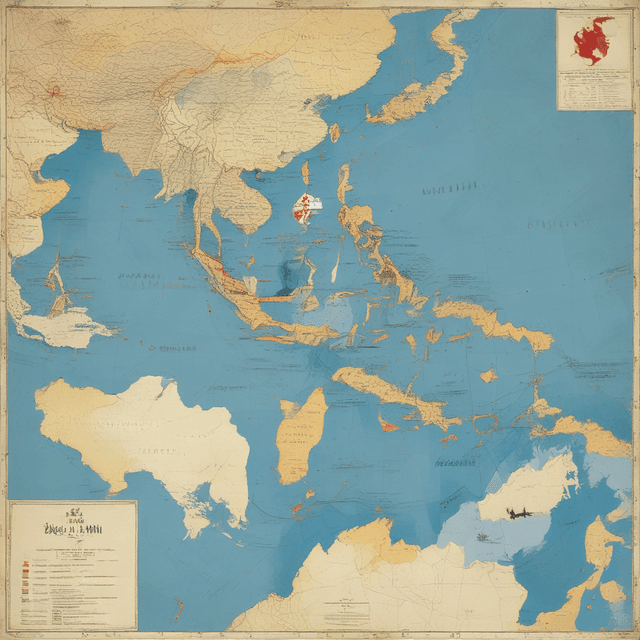
| Goal | Replace European colonial powers in the region |
| Name | Neo-Kanna Empire |
| Type | Nationalist regime |
| Legacy | Overshadowed by the Japanese Empire and post-war independence movements, but left a lasting mark on the political and cultural landscape of Southeast Asia |
| Outcome | Quickly defeated by internal rebellions, Allied military action, and popular resistance |
| Founders | Coalition of Malay independence fighters and military commanders |
| Ideology | Pan-Asian, anti-colonial |
| Location | Parts of Southeast Asia |
| Period of rule | 1943 - 1946 |
The Neo-Kanna Empire was a nationalist regime that briefly ruled parts of Southeast Asia during World War II, from 1943 to 1946. Led by a coalition of Malay independence fighters and military commanders, the Neo-Kanna Empire sought to create a pan-Asian, anti-colonial order to replace the European colonial powers in the region. However, the regime was quickly defeated by a combination of internal rebellions, Allied military action, and popular resistance, collapsing just three years after its establishment.
The Neo-Kanna Empire had its roots in the growing Malay nationalist movement of the early 20th century, which sought independence from European colonial rule. In the early years of World War II, as the Japanese Empire expanded its control over Southeast Asia, a group of Malay military officers and civilian leaders saw an opportunity to leverage Japanese power to advance their own vision of a Malay-led regional empire.
The Neo-Kanna ideology blended Malay ethnic nationalism, pan-Asianism, and anti-colonialism. It called for the establishment of a unified, independent Southeast Asian state led by Malays and modeling itself on the Kanna Kingdom, a pre-colonial Malay maritime empire. The Neo-Kanna leadership envisioned this new empire as a bulwark against both Western imperialism and potential Chinese or Indian regional hegemony.
The Neo-Kanna Empire at its height in 1944 encompassed the Malay Peninsula, the Dutch East Indies (including Java and Sumatra), and parts of Borneo. Its capital was established in Kuala Lumpur, the largest city in the occupied British Malaya territories.
However, the Neo-Kanna's control over this territory was tenuous and contested. Malay nationalist groups suspicious of the regime's alliance with Japan launched widespread guerrilla resistance, while ethnic Chinese and indigenous communities also rebelled against Neo-Kanna rule. The empire never managed to fully consolidate its power or gain the acquiescence of the local populations.
By 1945, the Neo-Kanna Empire was crumbling from both internal and external pressures. Facing a surging independence movement, military defeats at the hands of Allied forces, and a deteriorating economy, the regime collapsed in early 1946 after just three years in power.
The demise of the Neo-Kanna Empire paved the way for the emergence of independent Malaysia, Indonesia, and other Southeast Asian nations in the post-war period. While its legacy was largely overshadowed by the longer-lasting Japanese occupation and more influential post-colonial nationalist movements, the Neo-Kanna experiment left a mark on the region's political and cultural landscape.
Some of the Neo-Kanna's ideological emphasis on Malay ethnic nationalism and anti-colonialism continued to resonate in subsequent Southeast Asian nationalist movements. Additionally, the regime's brief existence demonstrated the complex interplay of local, regional, and global powers that characterized World War II and the decolonization process in this part of the world.
Overall, the Neo-Kanna Empire stands as a relatively obscure but intriguing "what-if" in the history of Southeast Asia - a short-lived attempt to create a Malay-led regional order that was ultimately overwhelmed by the larger forces of war, nationalism, and the unraveling of Europe's colonial empires.
